WHAT SIZE PADDLEBOARD IS RIGHT FOR ME?
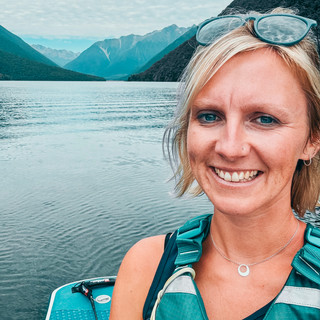
This is the biggest question I get asked after almost every paddleboarding lesson is "What paddleboard should I buy?".
And honestly... it's a great question, and a tough one to answer. Because it depends on so many things.
With hundreds of paddleboards on the market, it can feel impossible to know where to start. With different shapes and sizes, prices range from a few hundred dollars to several thousand. The best paddleboard is the one that's right for your size, ability, budget and the type of paddling you actually want to do.
If you are a beginner looking for your first SUP board, or if you are looking to upgrade, here's my mini guide on how to choose a paddleboard that is right for you (and not waste your money!)
1. Start With Your Budget
As with most outdoor gear, you generally get what you pay for. If you can stretch your budget a little, you'll usually get:
Better quality construction = a more stable and rigid board
More durable materials so your board will last longer
Higher quality accessories that won't break - like the pump, bag, leash and fin
A lighter, better paddle that makes paddling so much easier
A cheaper package might look like good value initially, but it often ends up costing more in the long run if the board is super unstable if it gets stuck or breaks.
2. Is an inflatable paddleboard or Hard Board right for me?
This is the big decision.

Inflatable Paddleboards
Perfect if you want convenience. There are so many great inflatables out there (and rubbish ones). This would suit you if you want a board that is:
Easy to store
Fits in the boot of your car
Easy to travel with
More durable around rivers and rocky launches
Great for carrying heavy loads of gear on multi-day adventures
Comfortable to transport with the backpack bag.
They do sit higher in the water, have more flex and are more affected by wind than a hard board.
Hard Paddleboards
Perfect if performance matters. You have to be careful not to damage hard boards, they need storage space and they need transporting on the roof of a car.
Hard boards have:
Better glide
Faster and more responsive
Less affected by wind
Great for racing and SUP surfing
No pumping or setup required
Both can be awesome on the right board - so choose the type that bests fits your lifestyle so there's less barriers to getting out on the water.
3. Board Volume Matters
Volume is created by the board's length x width x thickness (depth).
Too little volume and the board can flex under your weight, sometimes called the "banana effect" for an inflatable. If the board feels super unstable, tippy and you fall off constantly, it has too low volume for you.
Too much volume isn't ideal either. A board that's too buoyant for you can feel heavy, slow and harder to paddle in a straight line.
The right amount of volume depends on:
Your weight
Your height
Your balance
Your experience
What type of paddling you'll be doing
Different board shapes can affect how that volume actually feels, for example if a board has a higher total volume but it tapers in very narrow at the tail of the board, that will make that board feel tippy and twitchy. This is why we need to try before we buy!
4. Width = Stability

Generally, the wider the board, the more stable it feels. Boards 32 - 34 inches wide are great for:
Beginners
Larger paddlers
Family paddleboards
Casual recreational paddling
If you want lots of buoyancy, get a board that is wider at the tail too, which will make this feel more stable. Narrow at the tail is easier to turn but will be tippier as soon as you move as your feet back.
But wider isn't always better.
If you're a smaller paddler or have good balance, a board for example between 28 - 32 inches may actually suit you much better. This is because if your board is too wide, you'll struggle to keep your paddle vertical because you're reaching too far away from your body. That makes paddling less efficient and can make the board feel surprisingly sluggish.
5. Thickness Changes How the Board Feels
The depth of the board affects how high you sit out of the water.
Thicker boards (around 6")
Advantages:
More volume
More stability for heavier paddlers
Better for carrying camping gear
Disadvantages:
Higher above the water
Less connected feel
Harder to get back on
More affected by wind
Thinner boards (around 4.5 to 5")
These often feel:
More responsive
Closer to the water
Easier to control
Easier to self rescue
Less affected by wind
For many 'average' paddlers, a slightly thinner board can actually feel more stable because you're standing closer to the water.
6. Length Changes Everything
If you look at SUP racers, you will see that their boards are long and narrow. This is because this is more streamline in the water, will go faster and further and track straighter will less drag. So this makes longer boards suited for racing, and touring.

Longer boards (11'6" to 14')
These:
Track straighter
Glide further
Paddle more efficiently
Are faster
Are ideal for touring and racing
The trade-off?
They're harder to turn.
Shorter boards (around 10' to 11'3")
These are:
Easier to manoeuvre
More playful
Great for shorter paddles
Easier and lighter to carry
Most all-round paddleboards fall into this. But, they will be slower and more sluggish and harder to go straight over longer distance paddling. This is why the board shape and size makes a difference as to what board to choose depending on what paddling you want to do.
For example, my touring board is 12'6 x 30" for day paddles, multi day trips, and my SUP Surf board is 8'6 x 31" - shorter and a tad wider for easy turning and maneuvering in waves. For messing around, shorter crusiy paddles - a good all rounder board would be fun too.
7. Don't Just Compare Prices. Compare Construction.
Just focusing on inflatables for a second - not all inflatable paddleboards are built the same.
Cheaper boards:
Single skin construction - less stable
Lower maximum inflation pressure (around 10 to 12 PSI) - less stable
Glued seams - less durable
Knitted drop stitch - less rigid
Basic single-chamber pumps - takes longer to pump
Lower quality leashes - easier to break
Slide in fins - get stuck easily
Heavier paddles - sometimes they don't even float!
Better quality boards often feature:
Double-layer or heat-fused construction - more stable
Higher recommended PSI (15 - 22 PSI) - more stable
Heat-welded rails and seams - more durable
Woven drop stitch technology - more stable
Faster dual-chamber pumps - quicker pumping
Higher quality leashes - last longer
Universal fin box - easier to use and change fins
Lighter paddles built to be more efficient - that float!
Warranties of three to five years
These features all contribute to a stiffer, more stable and longer-lasting board that makes paddling more enjoyable!
8. Don't Overlook the Paddle
This is probably the most underrated part of any paddleboard package. A poor paddle can make a great board feel like hard work.
Cheaper paddles are often:
Aluminium = Heavy
Have oversized blades
Flutter through the water
Feature handles that twist while paddling or don't lock in at the right height
Sometimes don't even float
A better paddle often includes:
Fibreglass or carbon construction = Lighter weight
Better blade design = more efficient in the water
Anti-twist adjustment systems so it locks in place
A much more enjoyable paddling experience
If your budget allows, upgrading your paddle (over your board) often gives you one of the biggest performance improvements for the money.
Final Thoughts
If you can, test as many boards as possible. Some boards might feel a little bit twitchy - that you can grow into as your skills improve and you get used to the board. But if a board feels far too unstable from the start, it may simply be the wrong board for you. Find the board that fits your body, your goals and the adventures you want to have. The right board will make learning easier, help you build confidence on the water and keep you happy on the water for years to come.
Happy paddling!


Comments