LEARNING TO SUP SURF? ME TOO! 9 TIPS HELPING ME CATCH MORE WAVES
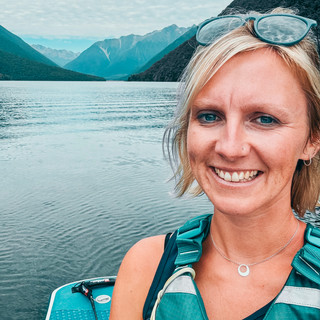
If you've ever watched someone effortlessly carve across a wave on a paddleboard and thought, "that looks amazing," then welcome to the club.
After years of teaching stand up paddleboarding, I had been desperate to up my skills on the waves but I never lived anywhere close enough for waves. Until now. SUP surfing has challenged me in ways I didn't expect. I've been tumbled, frustrated, caught in the wrong place at the wrong time, and spent plenty of hours wondering why everyone else seems to make it look so easy.
But after a recent SUP surf trip to New Zealand's west coast to Westport, with my trusty Moana SUP surfboard, things have started to click. I'm still very much learning, but these are the tips that have helped me make the biggest improvements so far.
If you're learning to SUP surf too, hopefully they'll help you skip a few of the mistakes I've made along the way.

1. Pick the Right Spot for learning to sup surf
The first thing that's helped me progress isn't technique. It's choosing the right location.
Beginner-friendly beaches where you feel safe learning. Sandy, free from rocks, and no strong rips or challenging currents.
I spent time studying the beach at low tide so I knew exactly what was underneath the water. I also chatted with locals and surf schools to understand any hazards, how the break works, and the best conditions to paddle there.
The more familiar you are with a location, the more brain space you have to focus on learning rather than worrying . Don't forget to get familiar with the tides, swell forecasts, and wind conditions too.

2. Use the Right Gear
The right equipment makes a huge difference when you're learning. I've been using a 8'5 x 31" SUP surf board, which is much easier to turn and manoeuvre than a larger all-round board.
Generally speaking:
Larger boards offer more stability and buoyancy.
Smaller boards are more responsive and easier to turn.
Hard boards are always way better over inflatable SUPs - by miles.
A few other gear changes that have helped me:
Using a straight ankle or calf leash that's roughly the same length as my board.
Shortening my paddle to around head height or just lower.
Experimenting with paddle length until it feels comfortable.
Small adjustments can make a surprisingly big difference.
3. Don't Start Too Big
This one took me a little while to learn. Every time I paddled out in conditions that were beyond my ability level, my confidence took a knock. Just getting out and over the waves seemed like such a battle.
Focusing on smaller, slower-breaking waves with plenty of time between sets give me time to think, position myself properly, and practise the fundamentals without feeling rushed. Choose mellow waves, and good learning conditions - which builds confidence. And confidence builds skills.
4. Choose Your Way Out Back of the waves
Getting through the breaking waves and out to the lineup can feel intimidating when you're starting out.
Rather than charging straight in, I spend time watching the ocean and waiting for a gap between sets and picking the right point along the beach on the shoulders of the waves.
When that gap arrives, I'll paddle out either standing or kneeling. As a wave approaches, moving to the back of the board helps lift the nose over the wave. Then applying pressure through the middle of the board helps bring the nose back down on the other side. It's not always graceful, but it's getting better.
5. Timing Is Everything
Catching a wave has much less to do with strength and much more to do with timing and positioning.
One mistake I made early on was trying to catch the first wave I saw.
Now I focus on:

Watching the set
Positioning myself correctly
Choosing a suitable wave- never the first in the set
Committing fully when I go. Paddle hard. Really hard.
If you go for the first one or two in the set, you could have the rest of the set dumping on you if you come off. It has happened so many times!
6. Learn How to Fall off your board
If you're learning to SUP surf, you're going to fall. A lot. The quicker you accept that, the more fun you'll have. Every fall teaches you something, whether it's about positioning, timing, balance, or reading the wave.
A few things I'm constantly reminding myself:
Protect your head
Jump away from your board whenever possible
Try to fall on the wave side rather than towards your board
Hold onto your paddle
Get back on quickly and paddle out of the dump zone
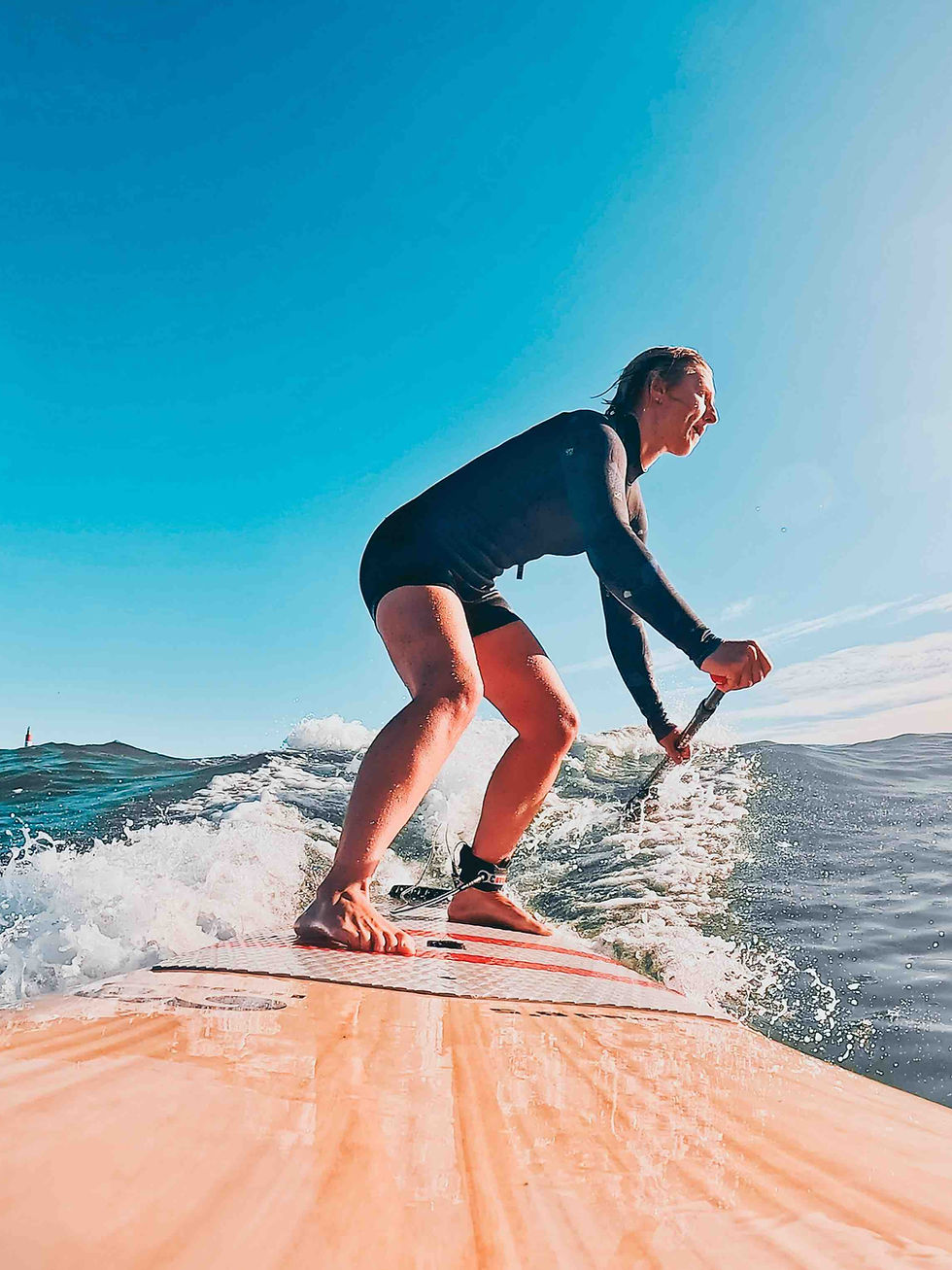
7. Play Around With Your body Positioning
This is probably the area I've experimented with the most.
I've been practising:
Looking where I want to go
Stepping back into a surf stance
Getting lower than feels natural
Adjusting foot placement.
Moving around the board more confidently
One thing that surprised me was how much further forward I needed to move to help the nose engage on some waves. It was way past the centre of the board. Not for all waves, but depending on their timing and power, I have experimented with moving my feet right up and down the board. Not just moving from the middle to the back. And this makes a huge difference. Don't be afraid to experiment.
8. Learn Surf Etiquette
SUP surfers can catch waves earlier and further out than many surfers. So for that, you are not always the favourite person!
It's important to understand surf etiquette and respect other water users.
A few basics:
Wait your turn
Don't drop in on someone else's wave, if they are behind you, its theirs
Don't paddle through the middle of the lineup unnecessarily
Be aware of those around you
Or, if you're anything like me while you're learning, simply stay well away from everyone else until you've got a better idea of what you're doing!
9. The sup surfing Tip That Changed Everything
Out of everything I've learned so far, this has been the biggest game changer. Catching a party wave with a more experienced SUP surfer.
I deliberately caught a wave alongside someone who was far more skilled than me. Watching exactly where they stood, how they moved around the board, when they stepped back, how they turned - it gave me an instant lightbulb moment. Suddenly things clicked. I still have a long way to go, but that single experience helped my learning more than any video, article, or tip I'd read.
Final Thoughts
SUP surfing has been scary, exciting, frustrating, and incredibly rewarding all at the same time.
I'm still learning, still making mistakes, and still getting tossed around all the time. But every surf session teaches me something new, and that's what keeps me coming back.
If you're learning to SUP surf too, remember that progress isn't always linear. Some days you'll feel like you've cracked it. Other days you'll feel like you've forgotten everything. And if you have big gaps between sessions, it can feel like you never progress. But as long as you are having fun, that is the most important thing.
If you've got any tips that helped you learn to SUP surf, I'd genuinely love to hear them. Drop them in the comments and I'll put them into practice on my next surf adventure.
Happy paddling!


Comments